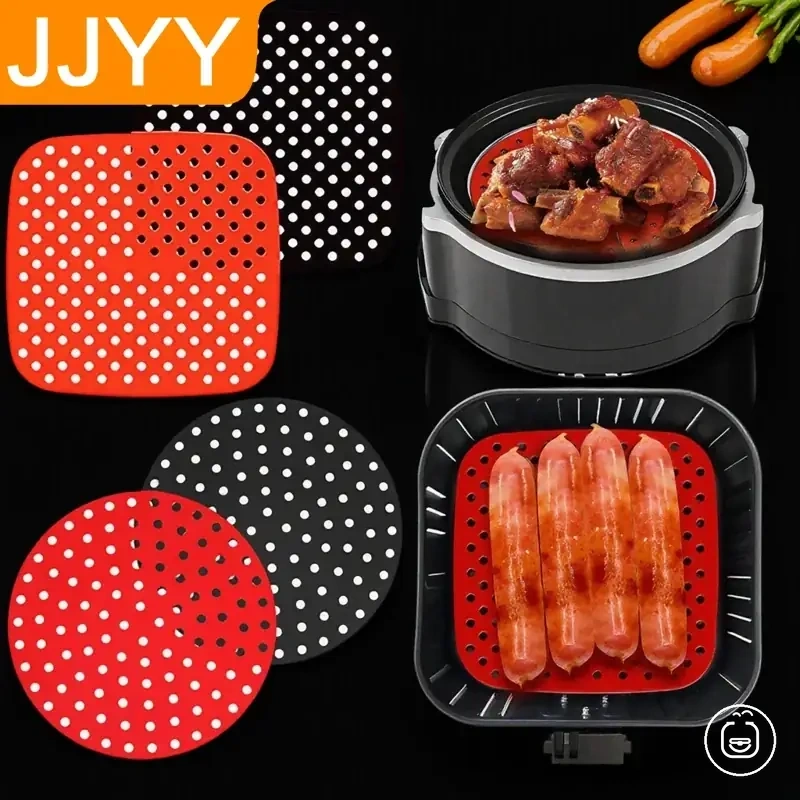
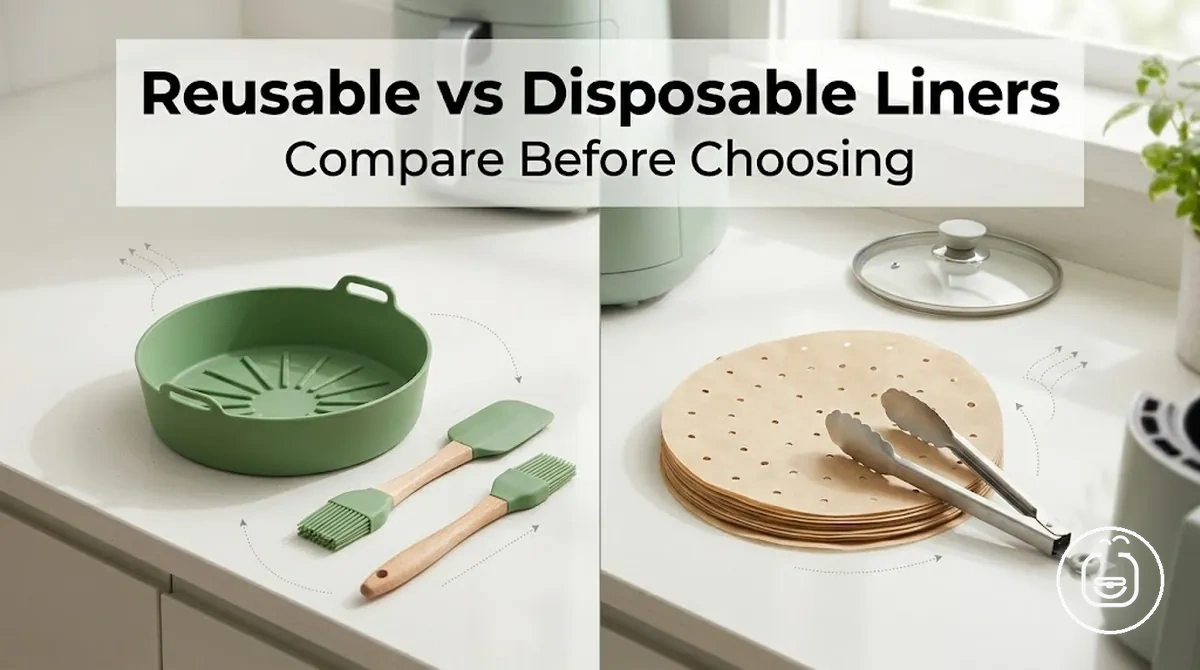
Reusable and Disposable Air Fryer Liners Compared
Reusable and disposable air fryer liners differ mainly in how they handle cleanup, airflow behavior, fit inside the basket, and long-term value. The choice between reusable air fryer liners and disposable air fryer liners usually depends on whether silicone liners or paper liners and parchment liners better match cooking habits and maintenance tolerance.
Confusion around liners often comes from how airflow, perforated holes, grease control, and basket fit interact during cooking. Silicone liners can support repeated use with washing, while paper liners and parchment liners are typically single-use and focus on reducing mess. These differences matter because airflow, food weight, and placement conditions can change how each liner performs in the basket.
In everyday cooking, reusable and disposable options tend to serve different usage patterns rather than competing as identical solutions. Silicone liners are often considered when repeated cooking and cleanup efficiency matter, while paper liners and parchment liners are often preferred for quick disposal after cooking. Understanding these basic liner types helps narrow the comparison before evaluating detailed factors like airflow behavior, basket compatibility, and value over time.
What reusable and disposable air fryer liners are
Air fryer liners are basket inserts used to reduce sticking, mess, or direct food contact during cooking. Reusable liners and disposable liners are the two main categories of air fryer liners.
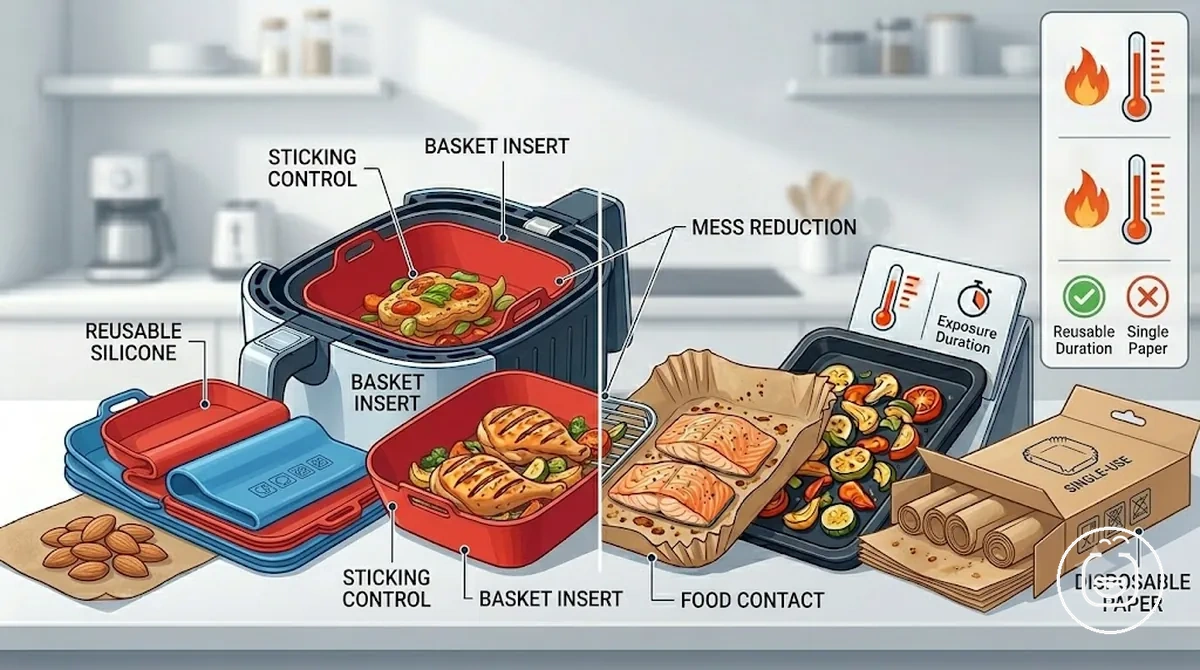
Reusable liners and disposable liners differ in material and use pattern. Reusable liners are typically silicone and designed for repeated use with washing, while disposable liners are usually paper or parchment used for single use and easier cleanup. These formats relate to broader air fryer accessory types that group different basket inserts by function. The table below organizes the two basic liner categories to clarify their structure.
Reusable liners focus on repeated basket protection, while disposable liners focus on quick removal of grease and residue after cooking. Both support basket management, but they do not replace correct air fryer use or proper food placement inside the basket.
| Liner type | Material or format | Typical use |
|---|---|---|
| Reusable liners | Silicone basket liners | Repeated use with washing and ongoing basket protection |
| Disposable liners | Paper or parchment liners | Single-use application focused on cleanup and reduced residue |
Reusable silicone liners for repeated cooking
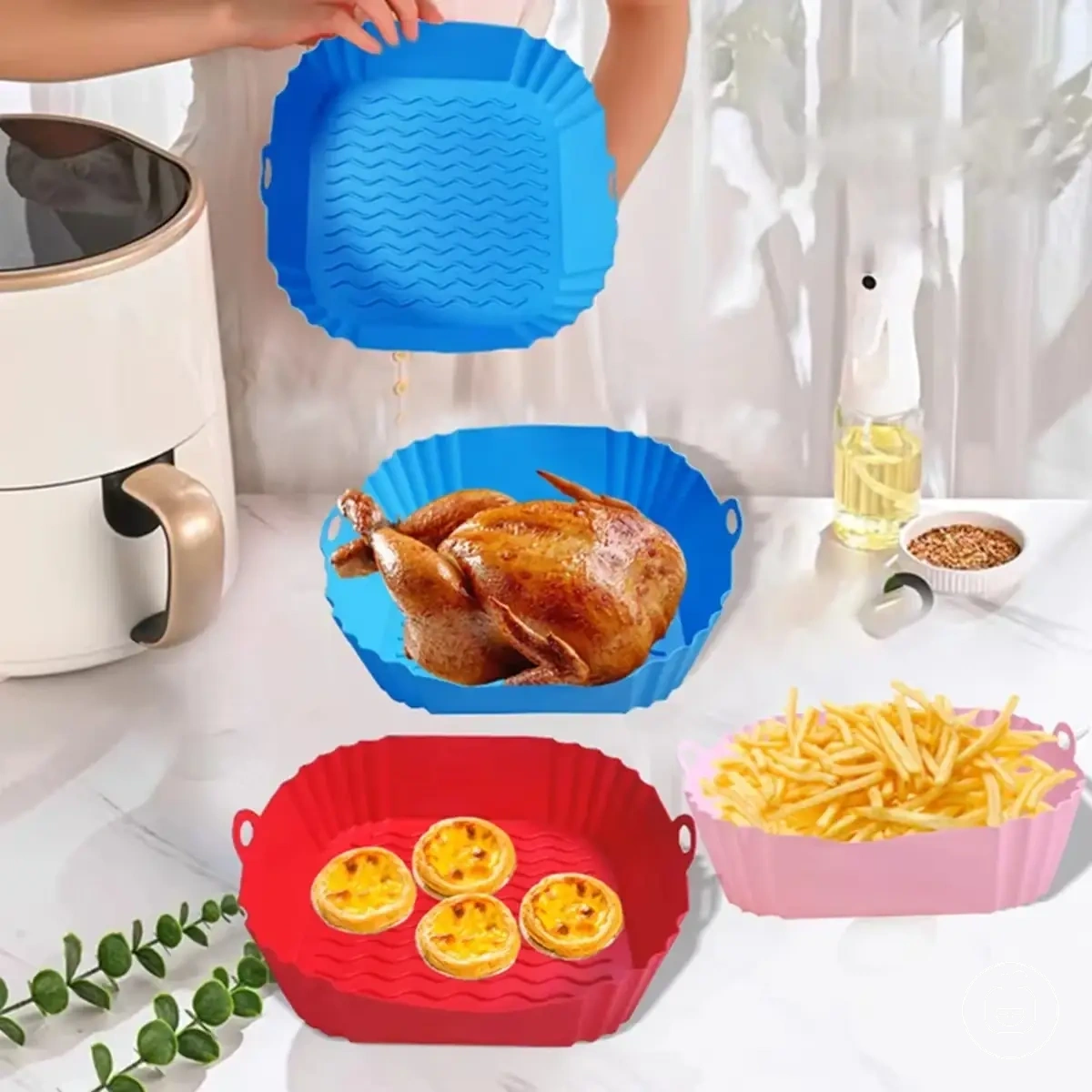
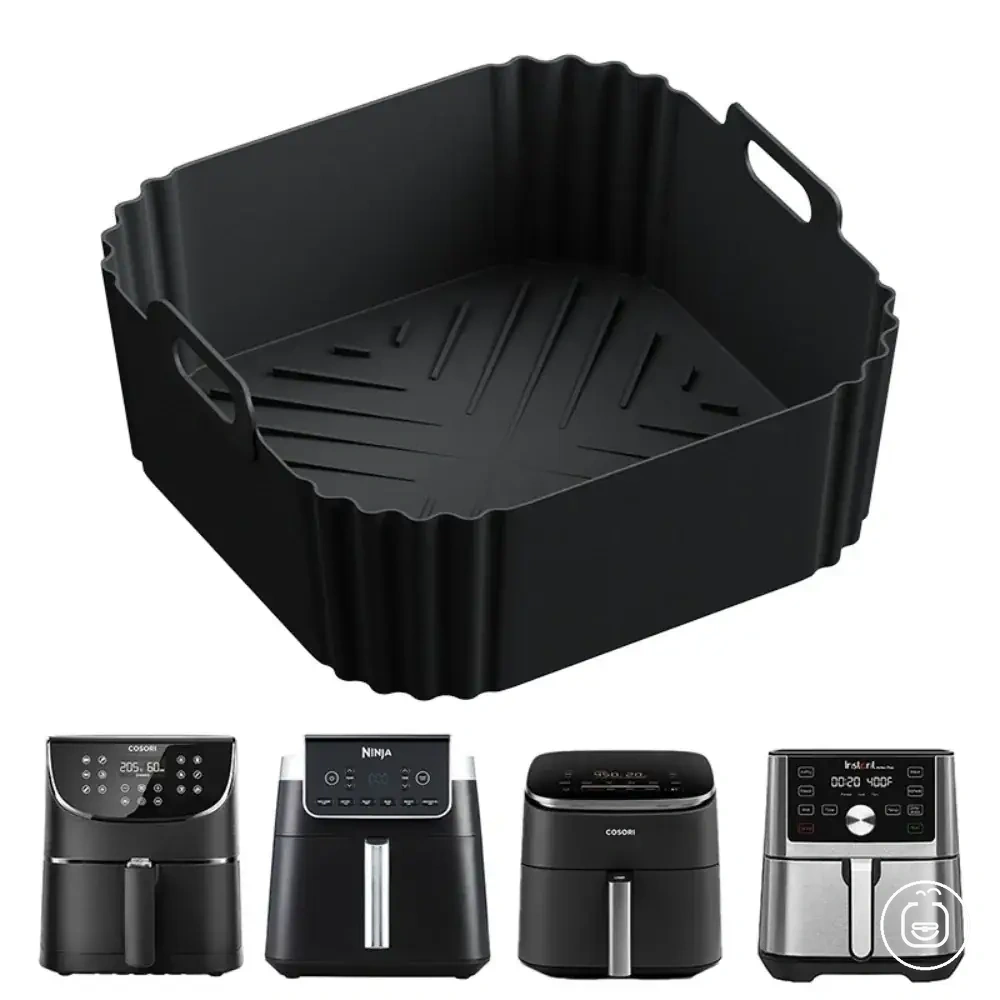
Reusable silicone liners are silicone-based basket inserts used for repeated use inside an air fryer. They are designed to stay flexible and washable, forming a stable layer inside the basket during repeated cooking sessions. This reduces direct food contact with the basket and helps manage residue buildup across multiple uses.
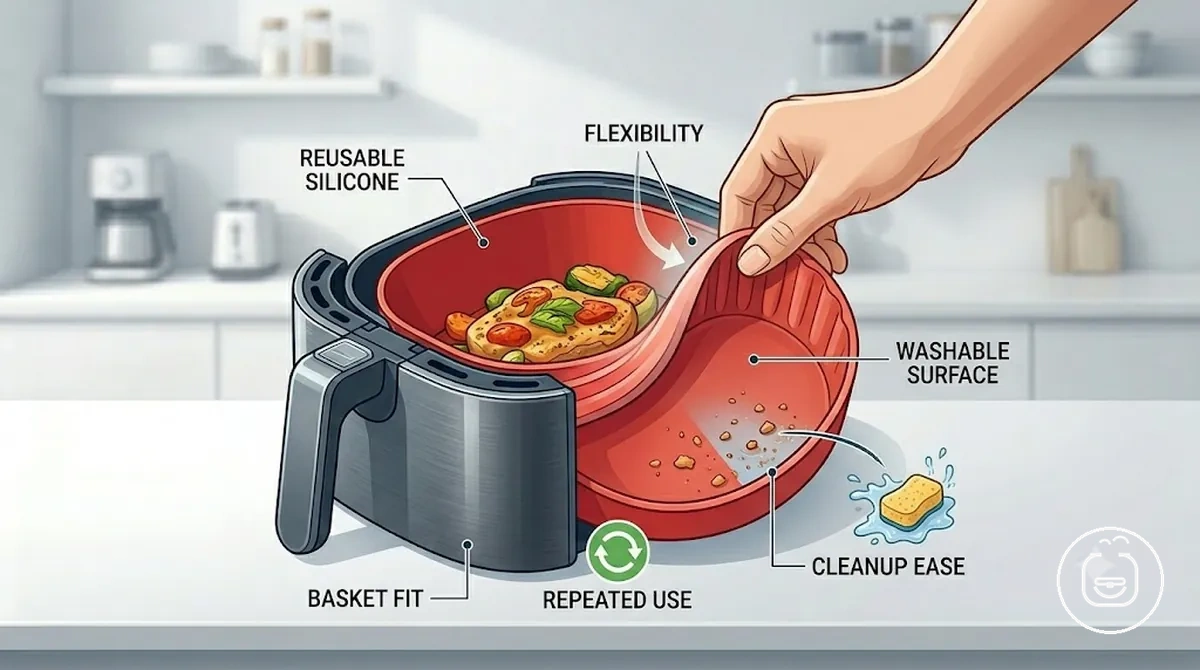
Reusable silicone liners for repeated cooking differ by traits that affect how they perform over time and through cleaning cycles. These traits influence how the liner behaves in daily use and how cleanup is handled after cooking.
Key traits of reusable silicone liners include:
- Flexibility: Adapts to basket shape depending on design
- Washable surface: Supports cleaning after repeated use cycles
- Shape stability: Helps maintain placement inside the basket
- Repeated use condition: Designed for multiple cooking sessions depending on wear and usage
Disposable paper and parchment liners for single-use cleanup
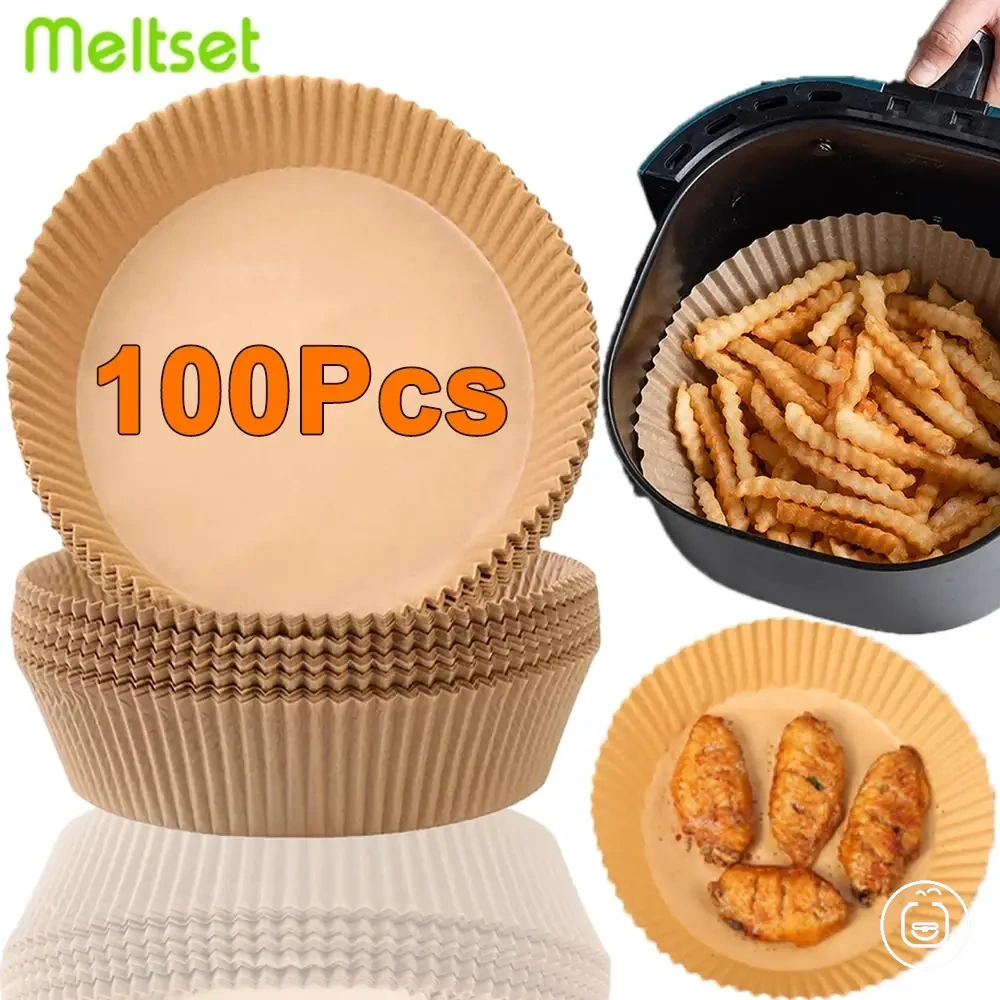
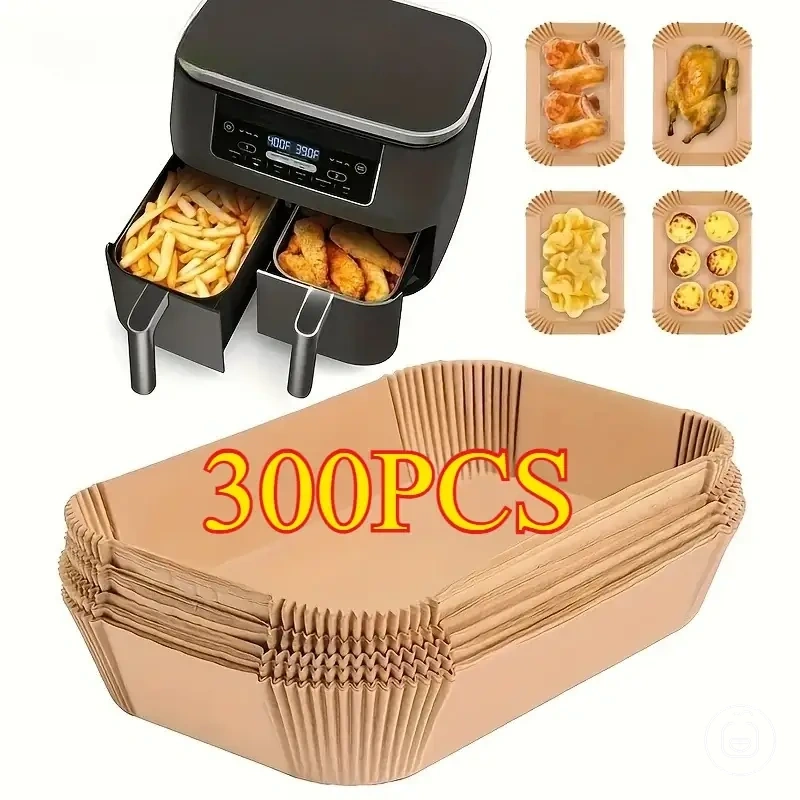
Disposable paper liners and parchment liners are single-use basket inserts designed for easier cleanup after air fryer cooking. They are made from paper or parchment material and placed inside the basket to catch grease, residue, and light food particles during cooking. After use, they are discarded, which reduces manual basket cleaning in many cooking situations.
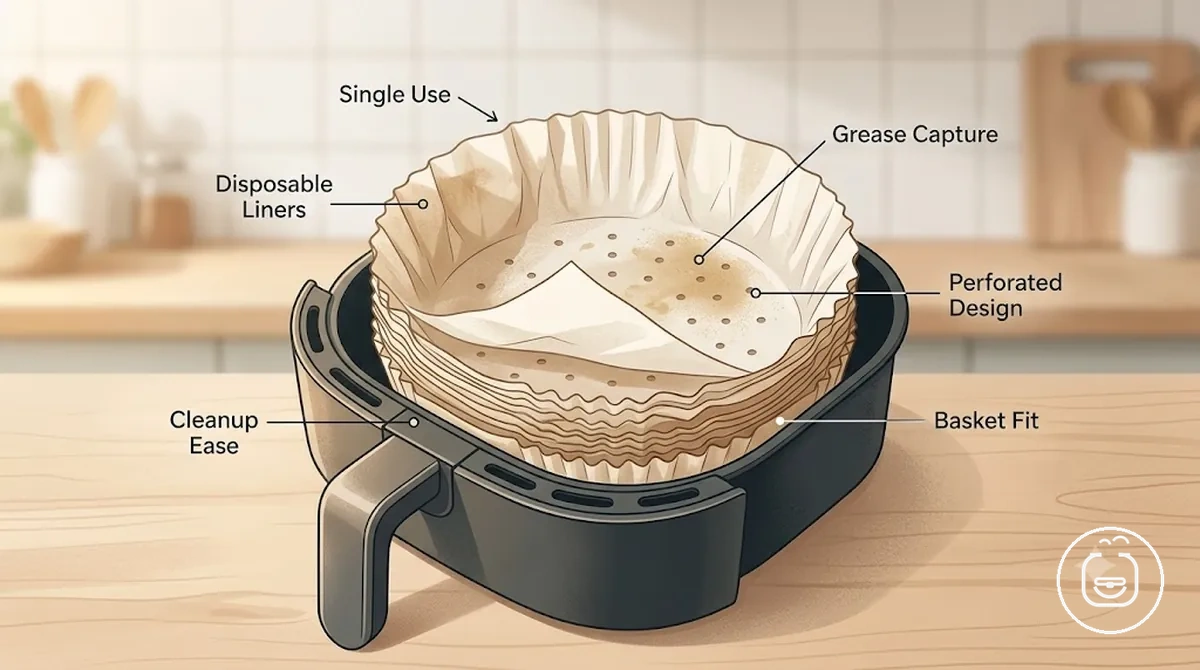
Disposable paper and parchment liners vary by shape and perforation, which can influence how they sit in the basket and how air moves during cooking in some setups.
Common disposable liner formats include:
- Plain parchment: Solid sheet-style liners used for basic single-use cleanup
- Perforated parchment: Liners with holes that may support airflow through the basket
- Shaped disposable liners: Pre-cut round or square formats designed to match basket layouts
Comparison factors that change the liner decision
Comparison factors that change the liner decision depend on how reusable and disposable liners perform across cleanup, airflow, durability, storage, and convenience rather than on liner type alone. These liners sit within broader air fryer accessories guide context where usage needs shape the final decision.
The decision is usually driven by how these factors interact during everyday cooking. Cleanup effort, airflow behavior through perforated designs, and how often liners are reused or discarded all influence the trade-offs between reusable silicone and disposable paper or parchment options. These conditions change how each liner fits different cooking habits.
Comparison factors that change the liner decision are summarized below to show how reusable and disposable liners respond under the same conditions.
This table organizes the main trade-offs between reusable and disposable liners based on key decision factors.
| Factor | Reusable silicone liner | Disposable paper or parchment liner | Decision impact |
|---|---|---|---|
| Cleanup | Washed after use | Discarded after single use | Changes cleaning effort vs disposal frequency |
| Airflow | Depends on design and perforation | Often perforated or solid | Affects circulation and cooking conditions |
| Durability | Designed for repeated use | Single-use material | Affects lifespan and replacement rate |
| Storage | Foldable or stackable | Packed in sheets or stacks | Changes kitchen storage needs |
| Convenience | Requires washing | Quick disposal after use | Affects routine effort and handling |
These factors work together rather than independently, so the decision depends on basket design, perforation level, cooking frequency, and cleaning preference. The trade-off between reusable and disposable liners varies by use case instead of following a fixed rule.
Cleanup and grease control
Cleanup and grease control depend on how reusable and disposable liners handle grease, residue, and basket contact during cooking. Reusable silicone liners usually require washing because grease and residue collect on the surface, while disposable paper or parchment liners are removed and disposed of after use. This creates a clear trade-off between washing effort and disposal behavior in everyday cleanup.
With sticky foods or oily cooking, grease and residue can still spread to basket edges depending on food load and liner placement. Reusable liners involve washing after use, and cleaning reusable liners becomes relevant when grease builds up over repeated cooking. Disposable liners reduce washing effort, but residue transfer to the basket can still occur in some cooking conditions.
Cleanup and grease control can be understood through three core behaviors:
- Grease capture: Liners may hold grease during cooking, but effectiveness depends on food type and placement
- Washing effort: Reusable liners require washing after grease exposure and residue buildup
- Residue transfer: Disposable liners reduce washing needs but may still allow grease or residue contact with the basket
Airflow, holes, and crisping
Airflow, holes, and crisping depend on how perforated liners, solid coverage, and food weight interact inside the basket during cooking. The presence of holes in perforated liners and the amount of basket coverage influence basket circulation, which can affect browning and crisping outcomes under different conditions. This creates a trade-off between airflow space and surface coverage depending on liner design and placement.
Airflow, holes, and crisping are influenced by liner placement and how air moves through perforated liners during cooking. Placement and usage context can be further understood through how to use air fryer liners, since coverage and spacing affect circulation patterns. Solid liners may reduce open airflow zones, while perforated liners allow more air movement depending on hole distribution and food load.
Airflow, holes, and crisping can vary based on a few key usage conditions:
- Holes: Perforated liners allow airflow through openings, which may support more even browning in some setups
- Food coverage: Larger or fully covered basket surfaces can limit circulation and affect crisping consistency
- Food weight: Heavier loads may press liners down, changing airflow paths and browning behavior depending on placement
Durability, reuse, and replacement frequency
Durability, reuse, and replacement frequency define how reusable and disposable liners differ in long-term value. Reusable liners depend on material durability and repeated use supported by washing, while disposable liners rely on regular replacement through new packs after each use cycle. This creates a value trade-off between reuse-driven lifespan and consumption-driven replenishment.
Durability and replacement patterns vary based on how often cooking happens and how much cleaning effort is acceptable. Frequent use increases the relevance of reuse for silicone liners, while occasional use can make disposable liners more practical due to simple replacement behavior. Value is shaped by use frequency rather than a fixed lifespan expectation.
- Reusable liners: durability supports repeated use with washing, so value depends on usage frequency and condition over time
- Disposable liners: replacement frequency is higher, with ongoing replenishment affecting convenience and consumption rate
Waste, storage, and everyday convenience
Waste, storage, and everyday convenience affect how reusable and disposable liners are preferred in daily use. Disposable liners create more waste through single-use disposal after cooking, while reusable liners reduce ongoing waste but require washing and handling before reuse. Storage needs also differ based on whether liners are kept as disposable packs or reused over time in a kitchen drawer space.
Everyday convenience depends on how each option fits routine cooking, available drawer space, and handling effort after use. Disposable liners are often preferred when single-use handling and quick disposal matter more, while reusable liners are chosen when storage and repeated washing are manageable. Preference usually depends on routine rather than a fixed advantage.
- Waste: Disposable liners increase single-use waste output, while reusable liners reduce waste through repeat use
- Storage: Disposable packs need ongoing storage space, while reusable liners take limited drawer space
- Handling: Disposable liners offer quick disposal, while reusable liners require washing and reuse handling effort
Fit and shape conditions for liner choice
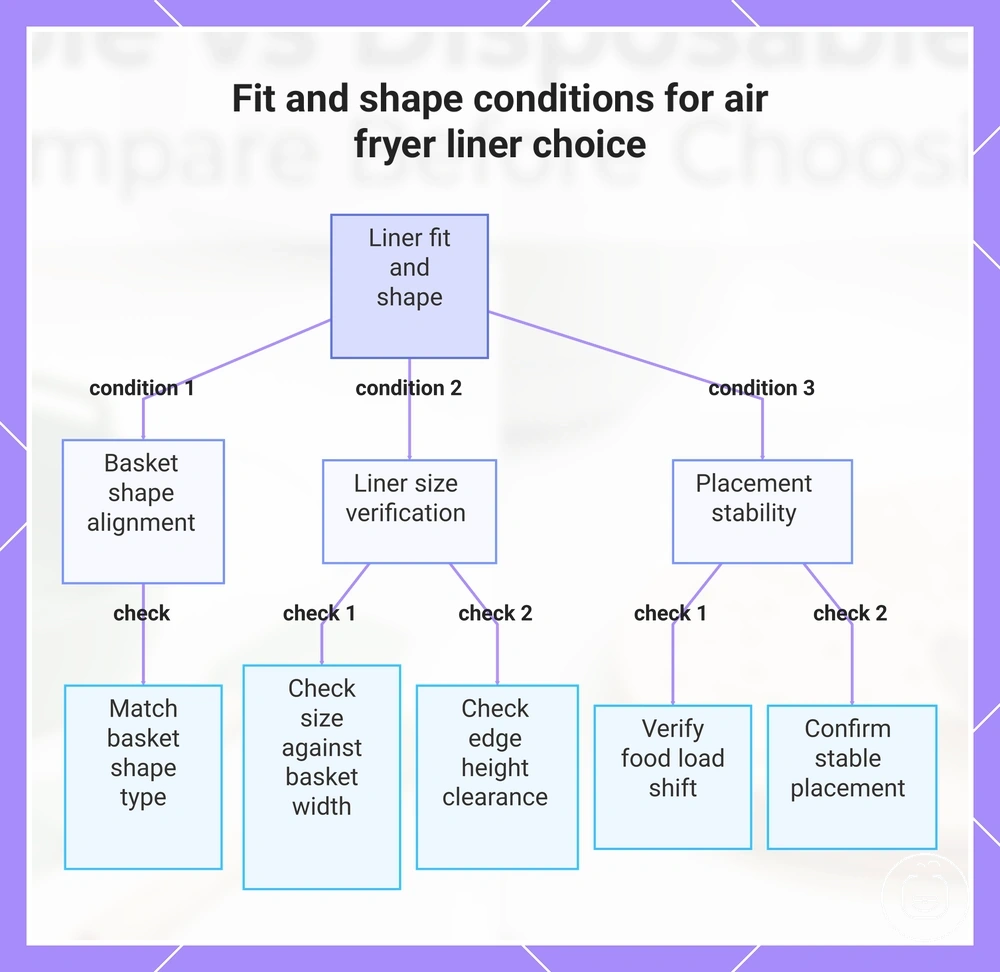
Fit and shape conditions for liner choice depend on how basket shape, liner size, and secure placement work together inside the air fryer. A round, square, or rectangular basket changes how the liner sits on the basket base, and mismatched size or shape can reduce stable placement. When the liner does not sit properly, airflow can become uneven and movement during cooking may increase, affecting safety and cleanup consistency.
Fit and shape conditions for liner choice can be quickly checked by focusing on basket geometry and placement stability. The checklist below shows what these conditions verify before use and how they relate to airflow and secure placement outcomes.
- Basket shape: Confirm match with round, square, or rectangular basket so liner shape aligns with the basket base
- Base size: Check liner size against basket diameter or width to avoid loose or oversized fit
- Edge height: Ensure liner edges do not interfere with airflow inside the basket
- Food load: Verify that heavier loads do not shift liner position during cooking
- Secure placement: Confirm liner stays stable to maintain airflow and safe cooking conditions
This chart summarizes key fit and shape conditions to check when choosing an air fryer liner, focusing on basket shape, liner size, and placement stability.
Round, square, and rectangular basket liners
Round, square, and rectangular basket liners refer to liner shapes designed to match different basket shape types, where fit depends on how the liner aligns with the basket base. Round liners usually follow curved basket edges, while square liners align with cornered bases, and rectangular liners extend across longer basket shapes. When the basket shape and liner shape do not align, edge coverage can become uneven, affecting fit and stability inside the basket.
Round, square, and rectangular basket liners differ mainly by edge coverage and how they sit inside the basket base. Each shape creates a different interaction with airflow and placement stability depending on how closely it matches the basket shape.
- Round liners: Best aligned with round basket shapes, offering smoother curved edge coverage with moderate fit stability
- Square liners: Match square basket bases and corners, improving edge coverage where straight walls meet
- Rectangular liners: Fit elongated baskets, extending coverage along longer sides while maintaining basic airflow clearance
Liner size and secure placement in the basket
Liner size and secure placement in the basket depend on basket clearance, edge height, and food weight. When a liner is oversized or loosely seated, it can shift during cooking, while an undersized liner may expose basket areas and reduce stable contact. These conditions can lead to movement, uneven airflow, or contact risk depending on placement stability.
Liner size and secure placement in the basket depend on clearance, edge height, and food weight.
- Liner size vs basket clearance: Match liner size to basket clearance to reduce shifting and maintain stable placement
- Edge height: Ensure raised edges stay within suitable limits to support stable seating without disrupting airflow
- Food weight: Heavier loads may press the liner down, influencing movement and placement stability during cooking
- Movement and airflow outcome: Poor seating conditions can affect airflow consistency and increase movement inside the basket
Safety limits for reusable and disposable liners
Safety limits for reusable and disposable liners depend on material suitability, placement, airflow, and contact with hot parts inside the air fryer. A silicone liner and a parchment liner may behave differently under heat, but both rely on stable placement and correct use conditions to reduce movement or contact with heating zones. When these conditions are not met, unsafe substitutes or loose liners can increase exposure to hot parts and disrupt airflow.
Safety limits for reusable and disposable liners should be checked before selection to understand material suitability and placement risks. Deeper material differences are covered under safe liner materials, which explains broader safety boundaries beyond this comparison.
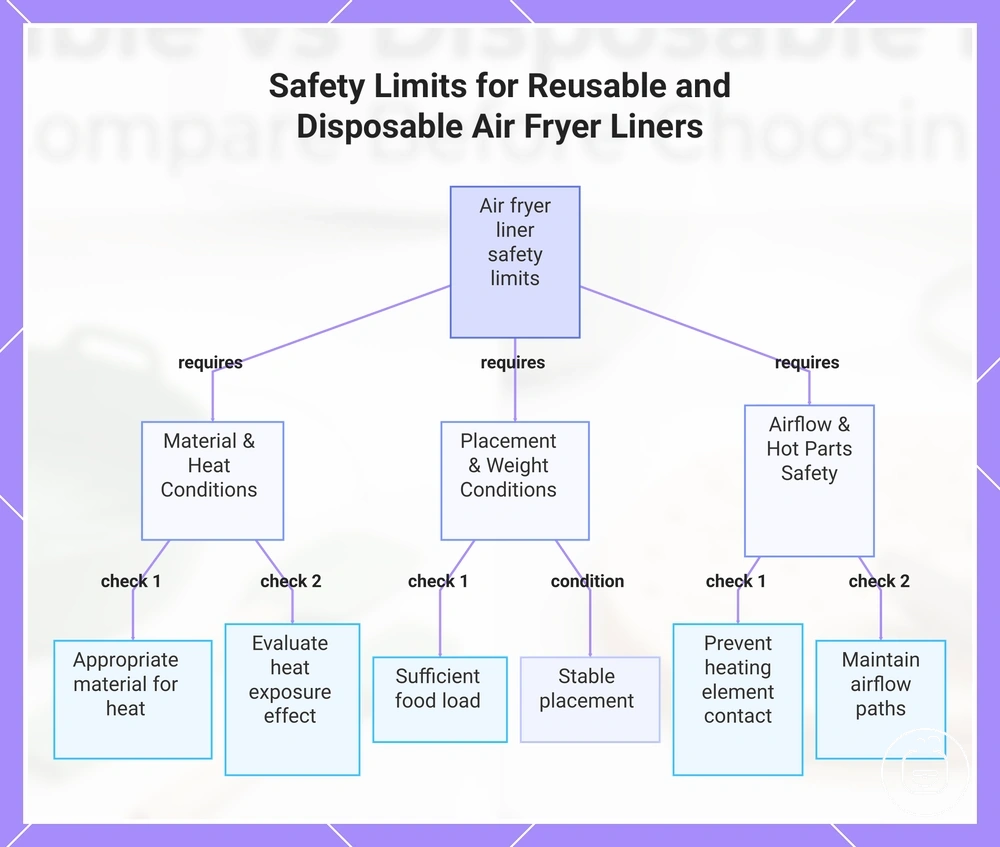
Liner safety limits depend on material suitability, heat exposure, food weighting, placement, airflow, and contact with hot parts.
- Material suitability: Ensure silicone liner or parchment liner is appropriate for heat exposure conditions
- Heat exposure: Evaluate how direct or repeated heat affects safe-use condition of the liner
- Food weighting: Use enough food load to keep the liner seated and reduce movement
- Hot parts contact: Prevent direct contact with heating elements or high-temperature zones
- Airflow condition: Maintain airflow paths to avoid overheating or liner displacement
This chart lists the key safety conditions that must be met for reusable and disposable air fryer liners, covering material suitability, placement, weight, airflow, and heat contact.
Heat-safe materials and unsafe substitutes
Heat-safe materials for air fryer liners depend on material suitability and how they respond to heat exposure and airflow inside the basket. A silicone liner and parchment liner are generally used when the coating and base material are designed for repeated heat exposure and stable placement. Unsafe substitutes such as generic paper types or unknown coated materials can increase risk when exposed to hot parts or direct airflow, especially if they are not intended for high-heat circulation environments.
- Silicone: heat-safe material when used as a silicone liner with stable placement and appropriate design
- Parchment: suitable when coating and liner material are intended for heat exposure conditions
- Paper type substitutes: unsafe substitutes when not designed for airflow and heat conditions, increasing contact risk with hot parts
Loose liners and heating element contact
Loose liners can shift during cooking due to fan movement, edge lift, or insufficient food weight, which may bring the liner closer to the heating element and increase contact risk while also disrupting airflow inside the basket. This behavior depends on placement stability and basket conditions rather than occurring in every use case.
In scenarios where loose liner movement is likely, checking key stability conditions helps reduce the chance of edge lift and unwanted proximity to the heating element.
- Edge lift: Check whether liner edges rise or fold under fan movement, increasing movement toward hot zones
- Food weight: Ensure sufficient load keeps the liner seated to maintain stability during airflow
- Fan movement clearance: Confirm airflow strength does not push a loose liner toward the heating element area
When reusable silicone liners make more sense
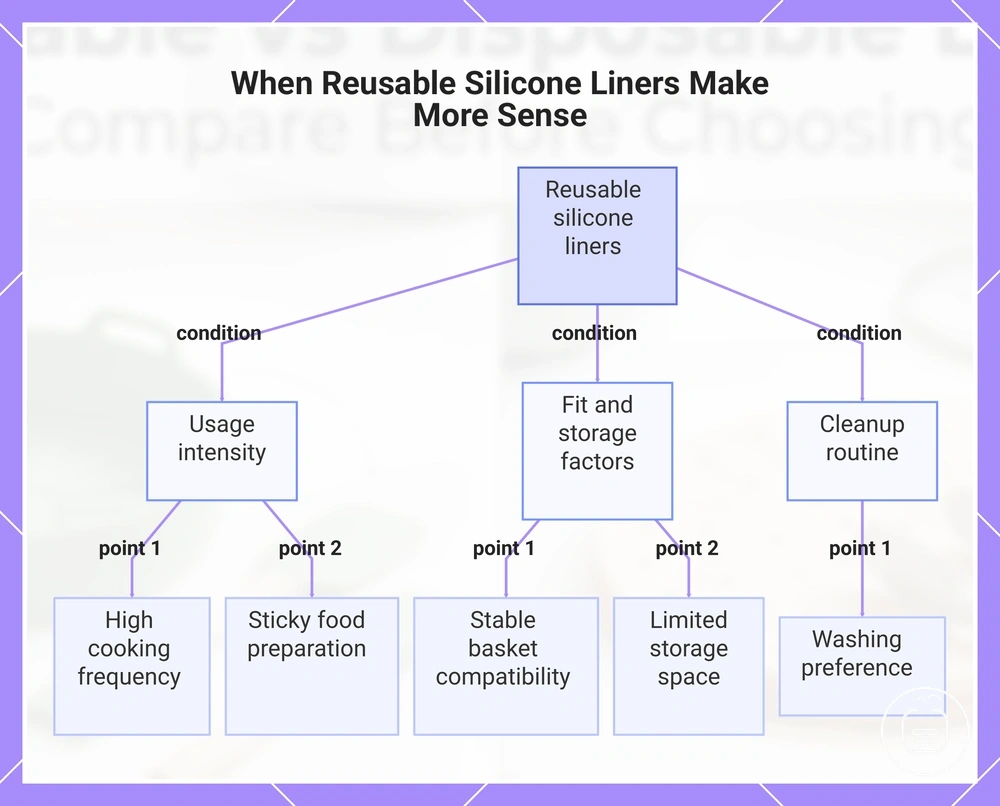
Reusable silicone liners make more sense when frequent use, washing tolerance, and stable fit are more important than single-use convenience. This selection depends on how often cooking happens and how consistently the liner needs to be reused, cleaned, and stored. In these conditions, reusable silicone liners can better match routine-based cooking where durability and cleanup habits matter more than disposal after each use.
The decision is usually shaped by cooking frequency, food type, and cleanup habits rather than a single factor. The scenarios below show when reusable silicone liners tend to be the more suitable fit based on practical use conditions.
- Frequent use: When cooking happens often, reusable silicone liners support repeated cycles of use and washing tolerance becomes a key factor in everyday convenience.
- Sticky foods: When preparing sticky or residue-heavy foods, silicone liners help contain residue, making cleanup more manageable compared to single-use alternatives.
- Stable fit: When basket compatibility and liner stability matter, reusable silicone liners provide structured placement that supports consistent positioning during cooking.
- Storage constraints: When kitchen storage space is limited, reusable silicone liners reduce dependence on continuous disposable stock.
- Cleanup preference: When users prefer washing over frequent disposal, reusable silicone liners align better with that routine and maintenance approach.
This chart shows the practical conditions where reusable silicone liners are more suitable than single-use alternatives.
When disposable parchment liners make more sense
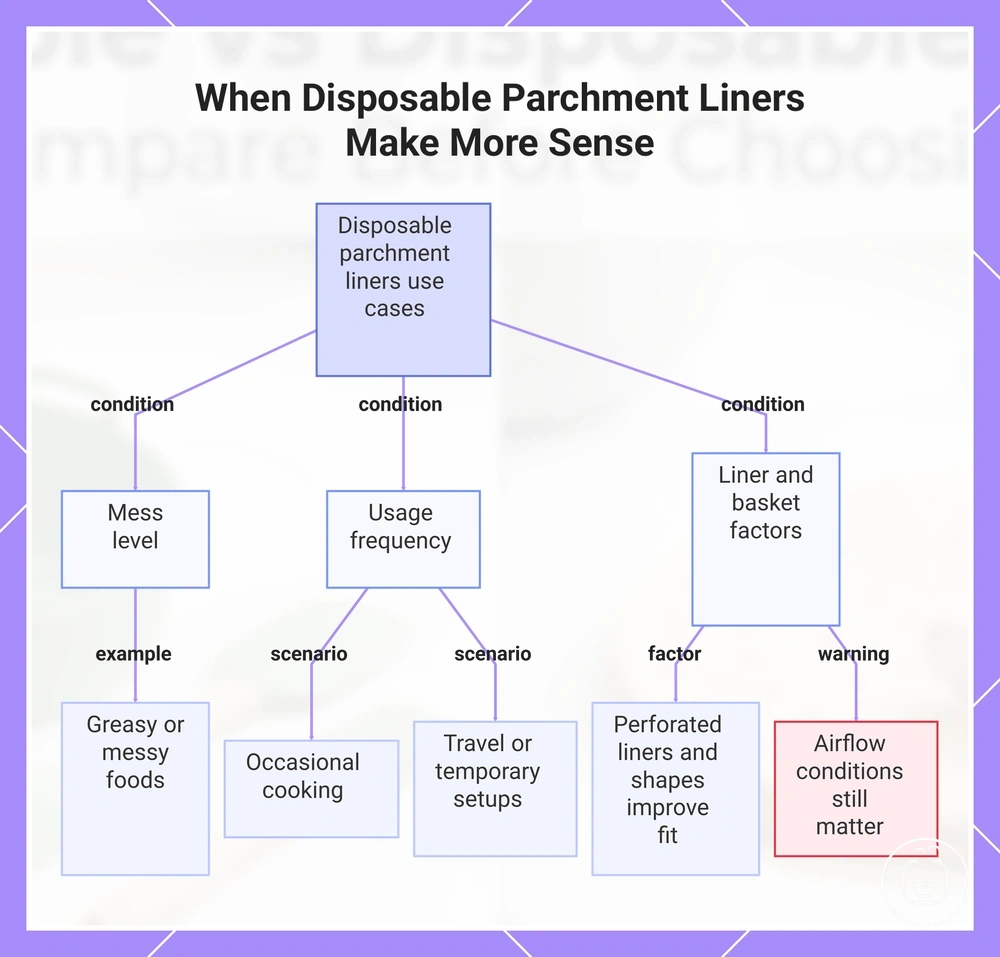
Disposable parchment liners make more sense when cleanup speed and single-use convenience are more important than reuse. This depends on mess level, cooking context, and how quickly the air fryer needs to be reset between uses. In these conditions, disposable parchment liners prioritize fast disposal and reduced handling after cooking rather than repeated washing.
These conditions usually appear in everyday situations where mess level, shared use, or occasional cooking changes how much cleanup effort is acceptable. The scenarios below explain when disposable parchment liners tend to be a more practical fit.
- Mess level: When cooking greasy or messy foods, disposable parchment liners can reduce direct basket residue, supporting faster cleanup speed through single-use removal.
- Occasional cooking: When the air fryer is not used frequently, disposable paper liners reduce the need for washing tolerance or repeated maintenance effort.
- Shared kitchens: When multiple people use the same appliance, disposable parchment liners support quicker resets and simpler cleanup between users.
- Travel or temporary setups: When cooking in temporary environments, disposable parchment liners provide simple single-use handling without storage after use.
- Perforated and shape availability: When basket fit varies, perforated disposable liners and different shapes can improve usability depending on availability and basket type, while still depending on airflow conditions.
This chart shows the main conditions where disposable parchment liners are a practical choice, including mess level, usage frequency, and liner factors.
When an air fryer liner may not be worth using
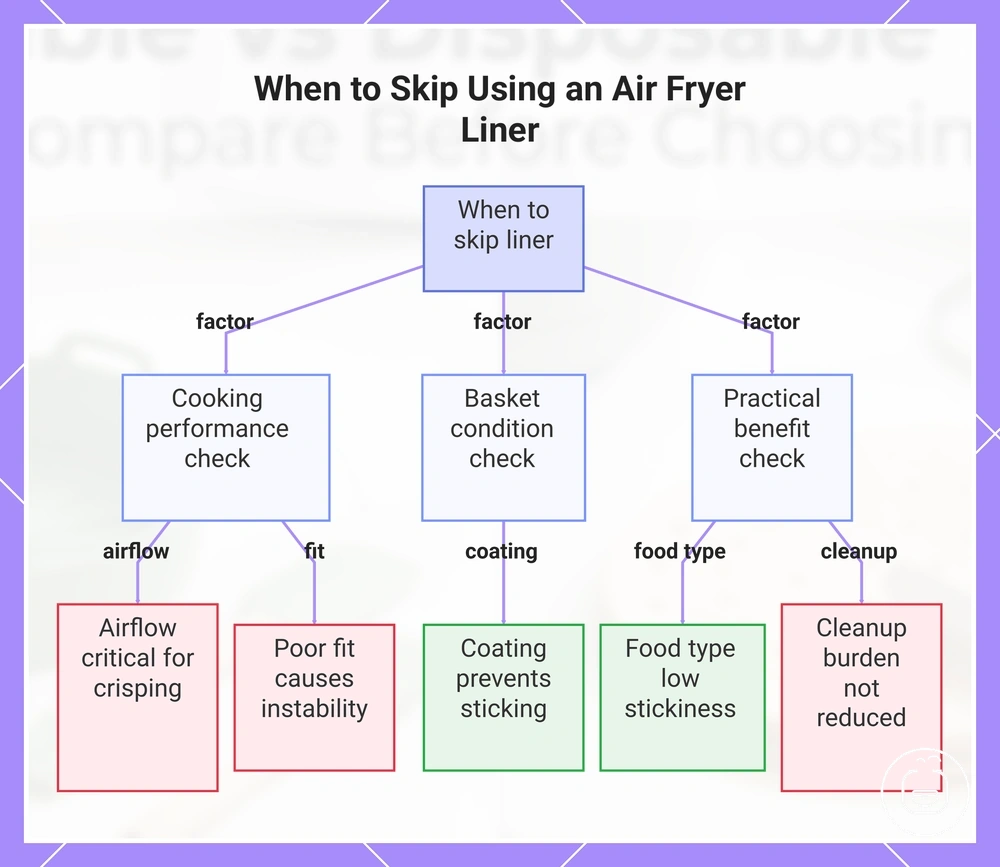
An air fryer liner may not be worth using when it reduces airflow, creates poor fit inside the basket, or adds cleanup burden without solving a real problem. In some cases, direct basket contact with the basket coating already handles cooking needs well enough, making liner-free cooking a reasonable option depending on food type and cooking conditions.
The use-or-skip decision depends on food type, basket condition, and cleanup burden. The checklist below helps evaluate when an air fryer liner may not be worth using based on airflow, fit, and surface performance factors.
- Airflow need: Skip liner use when airflow is critical for crisping and liner coverage may restrict circulation inside the basket
- Poor fit: Avoid liners when they do not sit properly in the basket and create movement or instability during cooking
- Basket coating: Skip liners when the existing basket coating already prevents sticking and handles direct basket contact effectively
- Food type: Reduce liner use when food does not create high stickiness or grease that would justify added separation
- Cleanup burden: Avoid liners when they do not meaningfully reduce cleaning effort and still require adjustment or handling after use
This chart shows the key factors that determine when an air fryer liner may not be worth using, helping you decide whether to skip the liner based on cooking performance, basket condition, and practical considerations.
Which air fryer liner type offers better overall value
Which air fryer liner type offers better overall value depends on how cost, reuse, cleaning effort, fit, and airflow needs interact in your cooking routine. Reusable liners often provide stronger overall value for frequent use because they spread cost across more uses, while disposable liners often provide better practical value for occasional cooking where cleanup speed matters more. The balance changes based on usage pattern rather than a fixed winner.
Overall value combines multiple factors, not just price. It includes how often a liner is reused, how often it must be replaced, how much cleaning effort is required, how well it fits the basket, and how it affects airflow during cooking. Which air fryer liner type offers better overall value depends on these combined conditions.
| Value factor | Reusable liner signal | Disposable liner signal | Decision effect |
|---|---|---|---|
| Cost pattern | Spreads cost across reuse count | Repeated replacement per use | Frequent use favors reusable |
| Cleaning effort | Requires washing after use | Single-use removal | Low-effort cleanup favors disposable |
| Fit and airflow | Stable when well matched | May vary by shape availability | Poor fit reduces value for both |
| Cooking outcome | Consistent use conditions | Convenient for varied use | Depends on basket and food type |
Reusable liners tend to gain overall value when frequent use increases reuse count and reduces replacement needs over time. Disposable liners tend to gain value when cleaning effort and time matter more than long-term reuse. In both cases, airflow, fit, and basket compatibility can shift perceived value depending on cooking conditions.
Overall value is typically seen as a trade-off between long-term reuse efficiency and short-term convenience. Reusable liners may suit consistent cooking habits, while disposable liners may suit flexible or occasional use where cleaning burden is the main concern. The better option depends on how these factors align with your routine.
Here are product examples that may make comparison easier. Before buying, always review the compatibility criteria, essential features, and product details.